
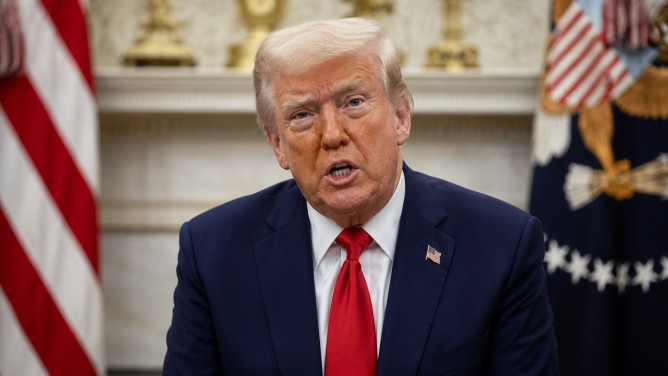
President Donald Trump has stated that the tariffs his administration plans to implement on Canadian imports are unrelated to the wildfires that have caused smoke to drift into parts of the United States. During a discussion with Lebanon’s president, Trump emphasized that these tariffs are the result of trade disagreements with Canada, rather than issues related to environmental management. He criticized Canadian leaders for what he perceives as unfair treatment of American farmers and reiterated criticism of Canada’s trade policies.
Speculation had arisen that the wildfires, which Trump previously accused Canada of failing to control, might have influenced the U.S. administration’s trade policies. However, Trump’s recent comments aim to clarify that the tariffs are primarily driven by trade issues. The White House has recently announced the intention to levy a 50 percent tariff on the majority of Canadian imports. This decision is based on allegations that Canada has implemented discriminatory practices against U.S. products, affecting sectors such as automobiles, dairy, and alcoholic beverages.
Canadian authorities have dismissed these allegations and are advocating for renewed negotiations to settle the ongoing trade conflict. The proposed tariffs are set to be enforced within the next 30 days unless both nations can come to a mutual agreement. This development has sparked concerns about potential economic instability and the implications for future trade relations between the United States and Canada.
The announcement of these tariffs marks a significant point in the already strained trade relations between the two neighboring countries. As both sides are urged to engage in dialogue, the economic landscape remains uncertain, with stakeholders closely watching the situation unfold. The outcome of any negotiations or the implementation of tariffs could have far-reaching effects on the economic ties that have long existed between the U.S. and Canada.