
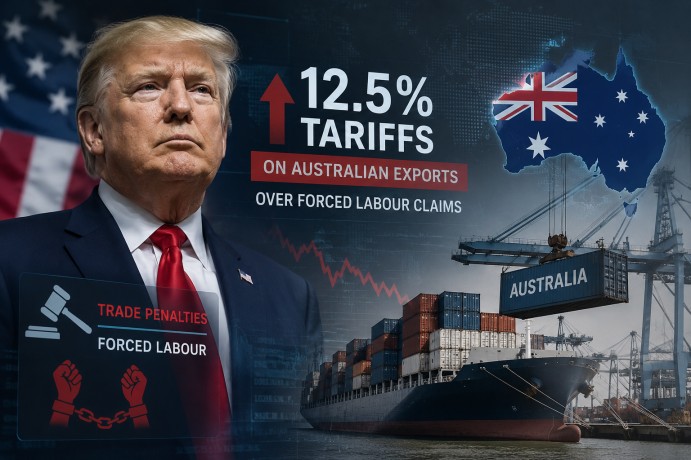
The United States has introduced a 12.5% tariff on numerous exports from Australia, pointing to insufficient Australian measures to prevent the entry of goods made with forced labor into supply chains. This decision has drawn a strong rebuke from the Australian government, which argues that the tariffs are both unwarranted and breach the terms of the Australia-U.S. Free Trade Agreement. Trade Minister Don Farrell emphasized that Australia has some of the most stringent laws globally concerning forced labor and modern slavery, urging the U.S. to promptly rescind the tariffs.
While the new tariffs cover a broad array of Australian exports, they notably exclude significant categories such as beef, gold, a variety of agricultural products, aircraft parts, and certain minerals and industrial goods. This partial exemption reflects a complex trade relationship, wherein both nations rely on each other for critical goods and services.
Australian authorities have expressed their discontent, insisting that the U.S. move lacks a factual basis and could potentially damage bilateral trade relations. Business organizations and industry leaders within Australia have also voiced their concerns, labeling the tariffs as unjust and detrimental to Australian exporters who rely on the American market.
This development comes amidst an expansion of trade measures by the Trump administration, targeting multiple countries over issues related to forced labor enforcement. The U.S. administration’s broader strategy aims to tighten controls and ensure that goods associated with forced labor do not enter American markets, a stance that has sparked controversy and debate among international trading partners.