
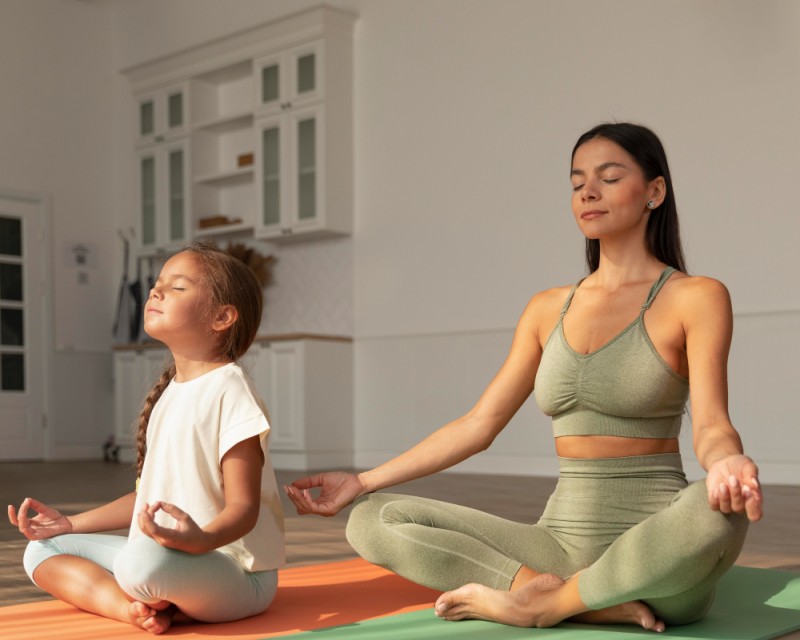
Yoga, a practice that extends beyond just physical exercise, plays a vital role in enhancing focus, balance, and emotional health. Introducing children to yoga can foster the development of healthy habits, heightened body awareness, and a tranquil mindset. As screen time increases and physical activity decreases among children, incorporating yoga into their routine can stimulate movement, relaxation, and mindfulness. Experts recommend that children engage with yoga through enjoyable and simple movements rather than adhering to rigid routines.
The ideal age for children to start practicing yoga is around 4 to 5 years, where they can engage in basic yoga activities through playful exercises. As they mature, typically between the ages of 6 and 12, they can progress to longer poses, breathing exercises, and more structured practices. The primary aim of yoga for children is to enhance their concentration, flexibility, confidence, and awareness of thoughts and emotions, rather than achieving perfect poses.
There are several key benefits to incorporating yoga into a child’s routine. Regular practice can improve flexibility and balance, encourage better posture, and enhance focus and concentration. Additionally, yoga helps children manage stress and emotions while promoting relaxation and mindfulness through breathing exercises. By practicing yoga, children gain valuable tools to slow down, stay active, and forge a stronger connection between their mind and body.
A few simple poses that can be introduced to children include the Tree Pose, Cat-Cow Pose, Butterfly Pose, and Child’s Pose. The Tree Pose involves standing on one leg, placing the other foot on the inner leg, and reaching arms upward like branches, improving balance, concentration, confidence, and leg strength. The Cat-Cow Pose, which involves alternating between arching and rounding the back while on hands and knees, enhances spine flexibility and posture while promoting controlled breathing. The Butterfly Pose, where children sit with the soles of their feet together and move their knees like butterfly wings, aids flexibility and stretches the hips and legs. Lastly, the Child’s Pose involves sitting back with arms extended forward, providing relaxation, tension release, and a stretch for the back.
By integrating yoga into their daily routine, children can cultivate a positive habit that keeps them active while nurturing patience, focus, and inner tranquility. Starting with a straightforward routine at an early age can contribute significantly to healthier physical and mental development.