
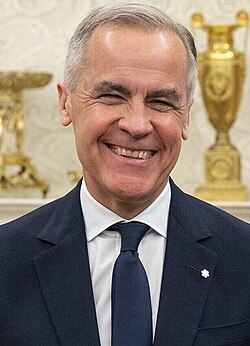
Mark Carney, the Canadian Prime Minister, has expressed a vision of Europe leading the reconstruction of a new international order, refusing to succumb to a world perceived as increasingly harsh and insular. He made these remarks at the European Political Community (EPC) meeting, marking the first time a non-European leader attended the gathering. This session, held in Yerevan, Armenia, unfolded amid heightened tensions in the Strait of Hormuz and skepticism about the United States’ steadfastness towards NATO. According to Carney, the gathering symbolizes a preferable path forward, challenging the notion that the world must adhere to transactional and isolated dynamics.
Carney’s commentary suggested that the epoch of American dominance might be waning, with Europe poised to play a pivotal role in international restructuring. He emphasized Europe’s potential to not only uphold a rules-based international framework but also to harness the strength embedded in its values. The EPC meeting in Yerevan was strategically chosen to highlight Europe’s commitment to preventing Armenia, a small Caucasus nation, from gravitating back into Russia’s sphere of influence. This European determination coincides with unease over the U.S.’s reliability within NATO, exacerbated by former President Donald Trump’s unexpected decision to withdraw over 5,000 troops from Germany, intensifying European concerns regarding transatlantic ties.
British Prime Minister Keir Starmer, addressing the assembly in Yerevan, acknowledged the current strains on traditional alliances, suggesting that how leaders manage these tensions will have long-lasting implications, potentially spanning decades. Meanwhile, French President Emmanuel Macron underscored the proactive steps Europeans are taking to assert their own security and defense capabilities. Ukrainian President Volodymyr Zelenskyy highlighted a crucial juncture for Russia, forecasting a pivotal summer where Russia might either broaden its aggression or pivot towards diplomacy, stressing the importance of maintaining sanctions unless Russia opts for peace.
The troop withdrawal from Germany is part of a broader contemplation by Trump to possibly reduce military presence in Italy and Spain as well, due to perceived insufficient support from these nations for US-Israeli efforts against Iran. As of late 2025, the U.S. had 36,436 troops stationed in Germany, 12,662 in Italy, and 3,814 in Spain. Kaja Kallas, the EU’s foreign policy chief, expressed surprise at the timing of this announcement, reiterating the necessity to bolster NATO’s European pillar. While speculations arose about whether the troop withdrawal was a punitive measure against German Chancellor Friedrich Merz, Kallas refrained from making assumptions about Trump’s motivations.
In contrast, NATO chief Mark Rutte acknowledged some American discontent over Europe’s hesitance to fully support the conflict in Iran. Nevertheless, he noted that Europe had responded to this message, now aiding U.S. operations logistically and strategically positioning assets for future phases. German Chancellor Merz, who opted not to attend the summit in Yerevan, reaffirmed his commitment to maintaining the transatlantic relationship and collaborating with former President Trump despite the challenges.