
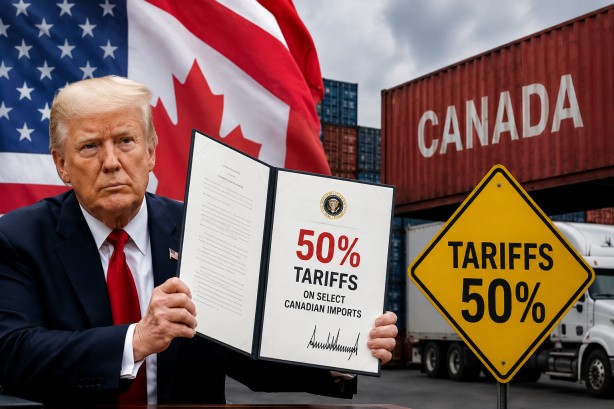
In a move likely to intensify the trade tensions between the United States and Canada, President Donald Trump has sanctioned a new set of tariffs, imposing a 50% duty on certain imports from Canada. These tariffs, which target sectors such as automotive materials, dairy goods, and alcoholic beverages, are part of a strategy to counter what the Trump administration perceives as Canada’s unfair treatment of American products.
These new duties were enacted through executive orders and coincide with ongoing trade negotiations under the United States-Mexico-Canada Agreement (USMCA). The administration’s goal with these tariffs is to address perceived inequities in trade practices that they claim disadvantage U.S. industries. By implementing these measures, the U.S. seeks to exert additional leverage in the discussions aimed at resolving trade imbalances and securing better market access for American businesses.
The introduction of these tariffs is expected to add another layer of complexity to the already challenging trade relationship between the two neighboring countries. As the negotiations progress, both U.S. and Canadian businesses are closely monitoring the situation, wary of how these developments might affect their operations and the broader North American trade landscape.
The imposition of these tariffs could potentially heighten economic tensions, prompting a significant response from Canada. As stakeholders on both sides of the border await Canada’s next steps, the focus remains on how these tariffs will influence the dynamics of trade and economic cooperation in the region.