
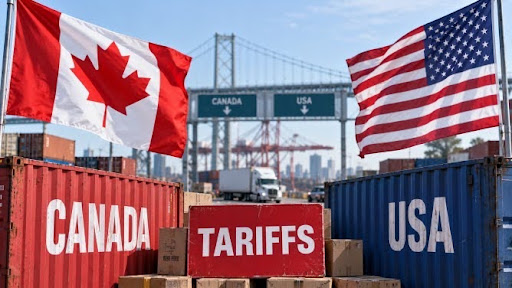
In a significant escalation of the trade conflict between Canada and the United States, Canada has enacted retaliatory tariffs on a wide range of American imports, valued at billions of dollars. Effective from 12:01 a.m. on Tuesday, these new tariffs, which range from 15% to 50%, affect about $20 billion worth of U.S. imports. The targeted goods include a diverse array of products such as steel, dairy items, appliances, agricultural machinery, pulp and paper, and electronics.
This move by Canada comes as a direct response to the United States’ decision to impose a 50% tariff on Canadian goods of equal value. Prime Minister Mark Carney emphasized that Canada will be accelerating initiatives to decrease its reliance on the U.S. market and will actively pursue stronger trade ties with other nations. This marks a pivotal moment as both countries grapple with economic strategies that could reshape their longstanding trade partnership.
Further complicating the situation, U.S. President Donald Trump has also targeted Canadian exports by imposing tariffs on products including vehicles and raw materials. These measures have impacted items like hockey sticks and cement, covering approximately 5.5% of Canada’s exports to the U.S. Trump has accused Canada of exploiting trade agreements to the detriment of U.S. interests, a claim that has intensified the strains in bilateral relations.
The tensions have not only affected trade but have also spilled over into diplomatic relations, with the situation deteriorating further. Trump has issued threats to limit the sales of Canadian aircraft manufacturer Bombardier within the U.S. unless the company increases its manufacturing presence in America. This adds another layer of complexity as both nations navigate the fallout from these economic policies.
Efforts to resolve the trade dispute hit a standstill in August when negotiations between Canada and the U.S. collapsed. Canadian representatives stated that the collapse was due to a series of new demands and restrictions imposed by the U.S., which Ottawa found unacceptable. The impasse highlights the challenges both countries face in finding common ground while managing their economic and diplomatic relations.