
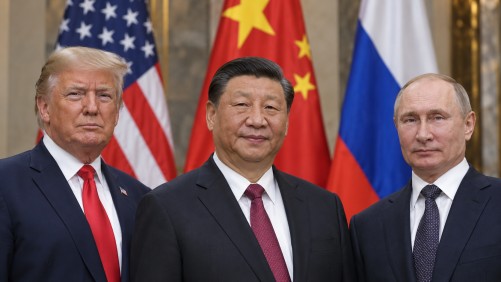
In a groundbreaking diplomatic meeting held in Shenzhen, China, on November 19, 2026, US President Donald Trump, Chinese President Xi Jinping, and Russian President Vladimir Putin convened to address pressing global issues such as nuclear security and energy supplies. The unprecedented trilateral summit was marked by a collective commitment to enhance cooperation on reducing nuclear risks and bolstering global energy markets.
The leaders issued a joint statement emphasizing the critical importance of preventing nuclear conflict, underscoring that a nuclear war cannot be won and must never be fought. This dialogue comes at a crucial time following the expiration of the New START nuclear arms control agreement between the United States and Russia earlier this year. Trump expressed a desire to forge a new agreement that includes China, although Beijing has been hesitant to accept such terms due to the relatively smaller size of its nuclear arsenal compared to Washington and Moscow.
On the energy front, the three nations agreed to collaborate on increasing the production and supply of refined petroleum products to stabilize global energy markets. Trump highlighted the strategic importance of maintaining oil shipments through the Strait of Hormuz, a vital corridor impacted by the ongoing conflict in Iran.
While the summit succeeded in establishing cooperative frameworks on nuclear and energy issues, it fell short of producing substantive resolutions regarding ongoing conflicts in Ukraine and Iran. In bilateral discussions, Trump and Xi addressed economic and trade relations, agricultural purchases, and regional security concerns, including the situation in Taiwan. Both expressed a mutual interest in fostering stable relations and enhancing communication channels.
Trump also held separate talks with Putin, marking their first interaction since a previous meeting in Alaska in 2025. Discussions centered on international security and the Ukraine conflict, yet no significant progress was reported in resolving the latter.
Additionally, the joint declaration touched upon the International Criminal Court (ICC), advocating for the respect of state officials’ immunity and cautioning against the misuse of judicial power. Despite the absence of concrete agreements on certain contentious issues, the summit represented an important step in diplomatic engagement among these major powers, with its long-term impact hinging on the actualization of the commitments made.