
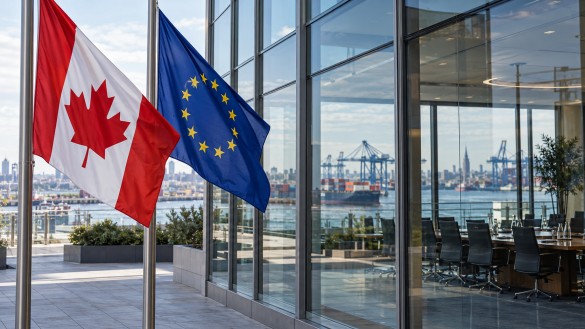
In a significant move to bolster economic and strategic ties, Canada and the European Union have launched a new partnership called the Alliance for the Future. Announced in Montreal by Canadian Prime Minister Mark Carney and European Commission President Ursula von der Leyen, the alliance aims to enhance economic security, expand trade, and deepen cooperation amid increasing geopolitical uncertainties. This initiative reflects Canada’s efforts to diversify its international relationships, especially in light of existing trade tensions with the United States.
The Alliance for the Future will remain open to other countries sharing similar values and objectives, highlighting a commitment to protecting shared interests and democratic values. A key component of the partnership is addressing vulnerabilities in global supply chains, where both leaders emphasized the importance of reducing reliance on major foreign technology providers and securing critical resources such as energy, minerals, and semiconductors.
As part of the agreements from the summit, Canada pledged support towards a €90 billion loan for Ukraine. Plans were also outlined to create a more integrated economic market, reduce trade and travel barriers, and expand educational opportunities. Technology and artificial intelligence emerged as focal points, with an agreement allowing Canadian researchers and companies access to Europe’s supercomputing network for AI model training.
Additionally, Prime Minister Carney announced a planned merger between Canadian AI company Cohere and Germany’s Aleph Alpha, which will result in joint headquarters in Toronto and Berlin. The Canadian government has indicated the potential for a substantial investment of up to C$1.6 billion in Cohere, further underscoring the technological priorities of the alliance.
Discussions also touched on the possibility of Canada becoming an associate member of the European Union. While not directed against other nations, this proposal was framed by von der Leyen as a chance to cultivate a closer relationship with a non-European country. The framework for such an arrangement is anticipated to be further explored at a summit in 2027.
Despite political disagreements in Quebec, where Premier Paul St-Pierre Plamondon declined to attend the summit over provincial representation issues, the commitment to strengthening economic resilience and international cooperation remains firm. European Council President Antonio Costa expressed support for the collaboration, citing Canada’s close political and cultural ties with Europe.