
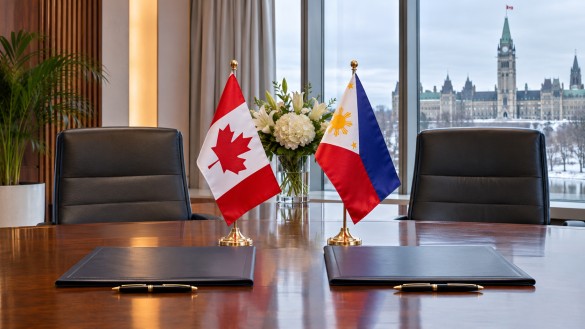
Canada and the Philippines have successfully concluded negotiations for a bilateral free trade agreement, with plans to formally sign the deal in 2027. This development was announced by Canadian Prime Minister Mark Carney and Philippine President Ferdinand Marcos Jr. during their meeting on the sidelines of the ASEAN summit in Manila. The agreement aims to bolster economic relations, enhance market access, and increase trade between the two countries.
The free trade agreement is a key component of Canada’s broader strategy to diversify its economic partnerships across the Indo-Pacific region, reducing reliance on the United States as a primary trading partner. Prime Minister Carney has set an ambitious goal of doubling Canada’s exports to markets outside the US by 2035. In 2025, bilateral merchandise trade between Canada and the Philippines amounted to approximately $3.4 billion, with Canada’s major exports including mineral ores, meat, cereals, fertilizers, and aircraft, while imports from the Philippines consisted of cooking oils, leather, and rubber products.
Beyond trade, the agreement also seeks to promote cooperation in areas such as labor mobility and climate resilience. However, discussions have highlighted concerns regarding environmental protection, labor standards, and human rights in the Philippines. These issues remain a focal point for future dialogue as the two nations work towards finalizing the agreement.
Canada is simultaneously pursuing a broader trade agreement with the ASEAN bloc, which comprises a market of nearly 700 million people. Trade between Canada and ASEAN countries reached $52.3 billion last year, underlining the growing significance of Southeast Asia in Canada’s economic strategy. The completion of the free trade agreement with the Philippines is expected to create new opportunities for businesses, strengthen supply chains, and deepen economic cooperation between the two nations.