
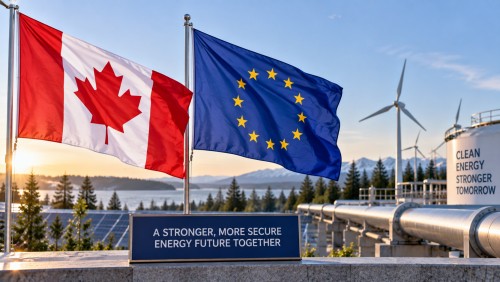
As Europe strives to bolster its energy security and lessen its dependence on Russian energy supplies, a potential partnership with Canada is being explored. Discussions between Canadian Prime Minister Mark Carney and European Union leaders in Strasbourg highlight the strategic interest in tapping into Canada’s vast energy resources as both regions aim to deepen their economic ties.
Canada is recognized for its substantial oil and natural gas reserves, primarily supported by well-developed export infrastructure on its West Coast. However, the nation’s eastern coast lacks the necessary facilities to directly supply energy to Europe, presenting a logistical challenge that could take years to resolve if new infrastructure is to be built.
To address this, one innovative solution under consideration involves energy swap agreements. These agreements would allow Canadian energy shipments originally intended for Asian markets to be redirected to Europe by exchanging them with other suppliers’ cargoes bound for Europe. This approach would enable European nations to access Canadian energy resources without the need for direct transatlantic shipments.
Beyond fossil fuels, the partnership could extend to critical minerals essential for Europe’s clean-energy transition. Canada could play a pivotal role in supplying these minerals, supporting the development of renewable energy sources and low-carbon technologies in Europe.
The evolving cooperation could thus encompass not only traditional energy trade but also the exchange of critical materials and clean-energy innovations. This multifaceted partnership aims to reinforce economic and energy relationships between Canada and the EU amid shifting global energy dynamics.