
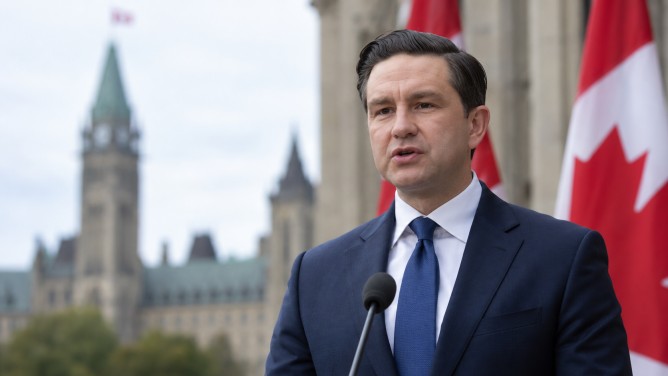
Canada’s potential deepening of ties with the European Union has stirred political debate following a proposal from the European Commission. The Commission’s President, Ursula von der Leyen, expressed support for Canada becoming the EU’s first “associate member,” a move that would mark a significant shift in the nation’s global alliances.
This proposal has sparked opposition from Canadian political figures, notably Pierre Poilievre, the leader of Canada’s opposition. During a rally in Brantford, Ontario, Poilievre declared that Canada should not become the 28th state of the European Union. He argued that the country already benefits from a free trade agreement with Europe and enjoys strong defense connections through NATO. Poilievre expressed concerns about adopting European taxes, laws, and immigration policies, emphasizing his resistance to changes that could compromise Canada’s sovereignty.
In contrast, Prime Minister Mark Carney has shown a more receptive stance towards the idea of closer collaboration with Europe. He has highlighted potential benefits, such as expanded opportunities for young Canadians and enhanced integration of financial services. Carney assured that any proposed partnership would be subjected to parliamentary debate and a vote, ensuring that the decision reflects the will of the Canadian populace.
This development comes as Canada and the European Union continue to explore ways to strengthen their partnership beyond the existing Comprehensive Economic and Trade Agreement (CETA). The discussions indicate a growing interest in enhancing economic and strategic cooperation in a rapidly changing global landscape.
The conversation surrounding Canada’s relationship with the European Union underscores broader questions about the country’s future direction in international relations. As debates unfold, the prospect of an associate membership with the EU remains a contentious yet pivotal issue in Canadian politics.