
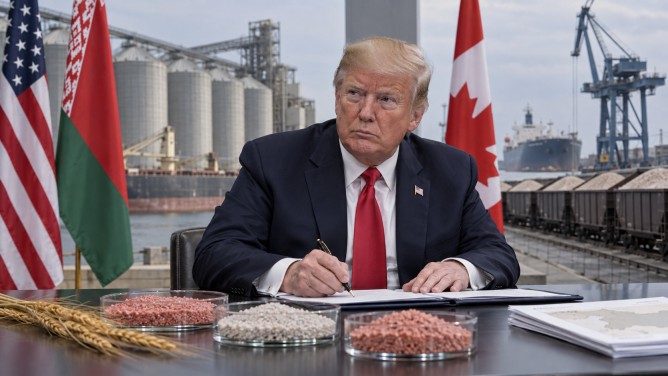
The United States is exploring new avenues to diversify its potash fertiliser imports amid a growing trade dispute with Canada. President Donald Trump announced that Washington is negotiating a major deal to procure potash from Belarus, potentially offering a cost-effective alternative to the current Canadian supplies.
As a crucial component in fertiliser production, potash is predominantly imported by the U.S., with Canada traditionally being the primary supplier. However, Trump’s administration has been applying increasing trade pressure on Canada, prompting the search for new partners. Belarus, alongside Russia, has been a smaller supplier of potash to the United States, but the proposed deal might alter this dynamic by providing U.S. farmers and ranchers with more affordable options.
The potential agreement with Belarus aligns with recent U.S. efforts to improve bilateral relations, despite the country’s controversial international standing. The Trump administration has eased certain sanctions on Belarus following the release of political prisoners, a move that might have facilitated discussions on the potash deal. Nevertheless, Belarus under President Alexander Lukashenko remains a subject of international scrutiny due to its internal political practices and its alignment with Russia, especially in the context of the ongoing conflict in Ukraine.
While the prospective deal could lead to lower fertiliser costs, it also carries broader diplomatic implications. Engaging with Belarus may influence U.S. relations with both Russia and Canada, adding another layer of complexity to the current geopolitical landscape. The agreement, therefore, is not just about economic benefits but also about navigating intricate international relationships.